
I used to dread the sales part of this business. Not the building — I loved the building. But sitting across from a potential client and trying to convince them to hand over a six-figure contract felt wrong to me. It felt like I was performing.
I'd leave those meetings feeling like I'd either oversold myself or undersold the project, and either way I'd drive home wondering why I couldn't just let the work speak for itself.
Then a client said something to me I've never forgotten. We were well into a custom home build, things were going smoothly, and I asked them offhand why they'd chosen us over the other guys they'd met with. They didn't hesitate. They said: we didn't pick you because you were cheapest. We picked you because you actually listened.
I sat with that for a long time.
"The clients worth having don't want a salesman. They want a builder who gives them confidence."
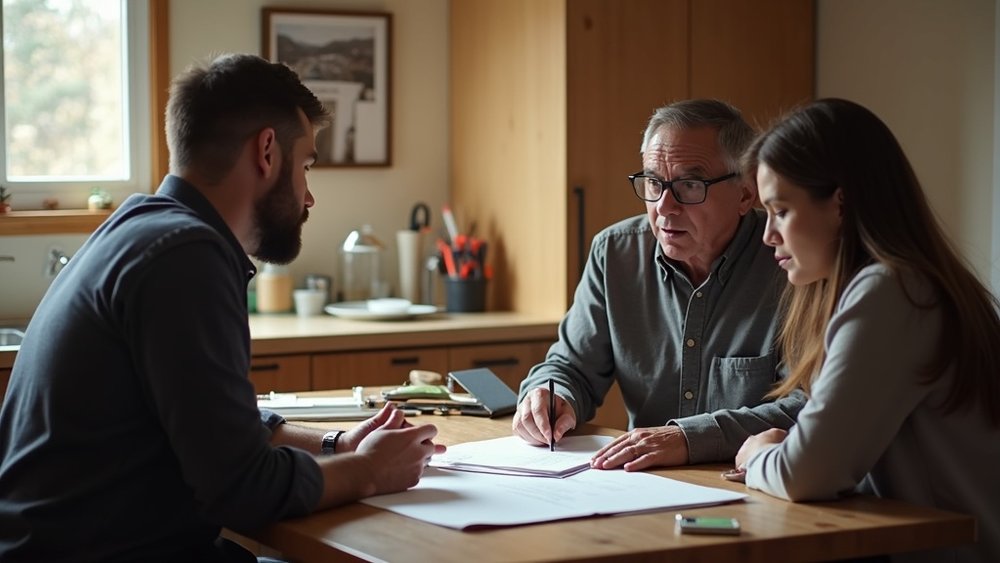
I'd been thinking about sales all wrong. I thought closing a deal meant having the right pitch, the right numbers, the right portfolio laid out in the right order. What it actually meant — especially at the high end of residential construction — was making someone feel like they were in capable hands before a single nail was driven. By the time a serious client sits down with you, they've already formed an opinion from what clients read before they ever call you — the reviews, the referrals, the content you've put out from your own job sites, the story other people tell about your work.
What Listening Actually Looks Like
In the first meeting, I used to talk too much. I'd walk in prepared to explain our process, our quality, our timeline, our warranty, our everything. I was so focused on presenting that I wasn't paying attention to what the client was actually telling me.
The clients tell you everything if you let them. They tell you what went wrong with the last contractor. They tell you what their spouse is worried about. They tell you what they've been dreaming about for this project and what keeps them up at night about it.
Now I go into a first meeting with the intention of asking more questions than I answer. I want to understand the project from their side before I start talking about my side. What's driving the timeline? Have they done a major renovation before? What does success look like to them when this is all done?
Those questions aren't a tactic. They're how you actually find out what you're being hired to do — and whether you're the right fit for each other. That last part matters more than most contractors want to admit. Not every client is your client.
Honesty Is the Pitch
Here's where I think a lot of builders lose high-ticket work without realizing it. They go into a meeting and they sell the dream. Everything is going to be smooth, the timeline is solid, the budget is firm, the finish is going to be incredible. The client sits there nodding, and then they go home and talk to their partner and one of them says — that all sounded a little too good to be true.
Because it did. Because it was.
I started doing the opposite. I tell clients what could go wrong. Not to scare them, but because they deserve to know what they're getting into, and because the ones who are serious about a major project respect that honesty. I'll tell them that custom builds almost always surface surprises once we're into the structure. I'll tell them that material lead times can shift and that we build buffer into the schedule for a reason. I'll tell them that the design they love might need to be value-engineered slightly to stay in budget, and that we'll have that conversation before we're committed, not after.
That kind of transparency doesn't lose you the job. It wins it. Because now the client knows that when something does come up — and something always comes up — you're not going to hide it from them or spin it. You're going to call them and tell them straight. Most builders never figure out that being straight with people is often the one thing that actually sets you apart from every other quote sitting on the kitchen table.
"Telling the truth before the contract is signed is the most underrated sales tool in this industry."
Walk Them Through the Process
One thing I started doing that changed how clients respond to me is walking them through my process step by step, in plain language, before they've committed to anything. Not a brochure version. Not a glossy overview. The actual sequence of how a project moves from first conversation to final walkthrough, explained the way I'd explain it to a friend. It's the same instinct that later became my non-negotiable pre-construction conversation — making sure the client understands the job they're actually buying. Part of that honesty is qualifying fit early, so I'm not pouring hours into estimates for jobs that were never going to land. And once that sequence is written down, it's the first thing a project manager can run without you in the room — which is what it means to get your sales process out of your head.
Most clients doing a major renovation or custom build have never done one before. They don't know what happens after they say yes. They don't know when decisions need to be made, who they'll be talking to on site, how changes get handled, or what the payment schedule looks like and why. That uncertainty is one of the biggest reasons people hesitate. They're not always unsure about you — they're unsure about the whole experience.
When you take the time to walk someone through the process clearly, without jargon, without rushing past the parts that might sound complicated, you're doing something most of your competition isn't. You're removing the fear of the unknown. For a client about to spend a significant amount of money on something they'll live inside, that matters enormously.
Show the Work, Not Just the Photos
A portfolio of beautiful finished photos is fine. Every builder has those. What actually moves the needle is showing past projects with real numbers and real timelines — what the original estimate was, what the final cost came in at, and why if there was a difference.
Showing a client that you came in on budget and on schedule is worth more than any photo of a stunning kitchen. And if you went over, explaining why and how you handled it shows them something even more valuable: that you're accountable and that you communicate. It all starts with pricing the job honestly in the first place — a number you've actually built up and can stand behind, not one you've shaved down to win the work.
Most clients doing a high-ticket project have heard horror stories. They know someone whose reno went sideways. They're not just buying a build, they're buying protection from becoming that story. When you can show them a track record with actual data behind it, you become the safe choice — and at this price point, being the safe choice is often enough. Part of that track record is how you handled it when things didn't go to plan, because how you handle problems becomes your reputation just as much as the jobs that went perfectly.
Following Up Without Being Desperate
After the meeting, I follow up once. A clear, direct message that says I enjoyed the conversation, here's anything I said I'd send over, and I'm available when they're ready to move forward. That's it. I don't chase. I don't send three emails in a week. I don't drop the price to get a response. What I do make sure of, before I ever leave that meeting, is that I've actually asked for the business — closing without the pressure tactics is a skill on its own, and most of it happens before the question ever gets asked.
If they're not ready, I let it breathe. Sometimes people come back two months later. Sometimes six. Sometimes they don't, and that's fine too.
The clients who need to be pressured into a decision are often the ones who become difficult clients once the work starts. The ones who take their time and come back on their own terms tend to be the ones you actually want to build for.
The Bottom Line
Selling high-ticket construction work is not about being a better salesman. It's about being a more honest, more attentive, more transparent version of the builder you already are. Ask real questions and actually listen to the answers. Walk clients through your process so they understand what they're signing up for. Tell them what can go wrong, not just what will go right. Show them proof, not just pictures. Follow up once and then respect their process.
The clients worth working with will recognize what you're doing, because it's exactly what they were hoping to find.
If this resonates with where your business is right now, I work with contractors and trades business owners across BC to help them build companies that actually run the way they should. See how my construction business coaching works.
Quick answers
How do you sell high-ticket construction work without being pushy?
It isn't about having a better pitch. The clients worth having don't want a salesman — they want a builder who gives them confidence. Go into the first meeting planning to ask more questions than you answer, actually listen to what the client tells you, and walk them through your process in plain language so they understand what they're signing up for before they commit.
Should I tell a client what could go wrong before signing the contract?
Yes. Telling the truth before the contract is signed is the most underrated sales tool in this industry. Custom builds almost always surface surprises, material lead times shift, and a design might need to be value-engineered to stay in budget. Being honest about that up front doesn't lose you the job — it wins it, because the client knows you'll call them straight when something comes up.
How should a contractor follow up after a sales meeting?
Follow up once. Send a clear, direct message saying you enjoyed the conversation, include anything you said you'd send over, and let them know you're available when they're ready. Don't chase, don't send three emails in a week, and don't drop the price to get a response. The clients who take their time and come back on their own terms tend to be the ones you actually want to build for.
Get The Builder's Playbook in your inbox
A short note from Eddy with a link to the week's post — one email a week, every Thursday, nothing else.
No spam. Unsubscribe with one click any time. Privacy policy.
This site is protected by reCAPTCHA and the Google Privacy Policy and Terms of Service apply.