
I put a 21-year-old apprentice and a 54-year-old journeyman together on a framing project once and watched what happened over the first two weeks. The journeyman was one of the best framers I'd ever worked with: fast, precise, no wasted movement. The apprentice was bright, eager, and showed up every morning genuinely wanting to learn. By the end of the first week, they'd stopped talking to each other except when the job required it.
What I saw when I asked them separately about it was almost comical in how symmetrical it was. The journeyman thought the apprentice didn't respect the craft — too eager to take shortcuts, always on the phone, didn't seem interested in understanding why things were done a certain way, just wanted to check boxes. The apprentice thought the journeyman was dismissive: never explained his reasoning, reacted badly to questions, seemed to think enthusiasm was a character flaw.
Neither of them was describing a bad person. They were describing the same two weeks from completely different communication styles, and neither one of them had the vocabulary to say that out loud.
Why the Friction Looks Like a Values Problem When It Usually Isn't
The easy narrative when this kind of tension shows up on a job site is that one generation doesn't care or the other won't change. That narrative is almost always wrong, and believing it costs you because it leads to responses — resignation, separation, tolerating low-level conflict — that don't actually address the real issue.
The real issue is almost always communication style. What respect looks and sounds like in practice. How feedback should be delivered and received. What the relationship to hierarchy means: whether authority is earned through demonstrated competence or conferred through experience and title. How ambiguity gets resolved. These aren't values questions. They're learned patterns that differ between people who came up in different contexts, and the gap between them is bridgeable once you name it.
What actually keeps crew members engaged beyond the paycheque is consistent across generations in the trades: they want to do work they're proud of, they want to feel like the people they work with take them seriously, and they want to know that the standards they're holding themselves to actually matter to the business. Those motivations don't change with age. The friction is almost entirely in the layer above that, in how each generation communicates the same underlying values.
The experienced trades person who reads the younger worker as disinterested usually isn't seeing disinterest. They're seeing a different learning style. The younger worker who reads the veteran as dismissive usually isn't seeing dismissal. They're seeing a communication style developed in environments where knowledge was transferred by watching and doing, not by explanation and discussion. Both reads are partly accurate descriptions of the behaviour. Neither is an accurate description of the person behind it.
The Mistake of Picking a Side
A lot of owners I talk to about this have unconsciously decided to favour one generation over the other. Either they're frustrated with younger workers who they see as soft, and they've mentally sided with the veterans who remember how it used to be done. Or they've written off the veterans as resistant to change, and they're building a younger crew who are more comfortable with technology and more adaptable in the ways that feel modern and progressive.
Both of those positions cost you something real. The veteran with thirty years of trades knowledge is carrying information about what the craft actually requires at a level that no amount of classroom or YouTube exposure has replicated. That knowledge is enormously valuable and genuinely hard to replace. What it really means when knowledge lives in one person, when the craft only lives in the heads of your most senior people and hasn't been documented or transferred, is that you're one retirement away from losing something you won't easily rebuild.
The younger generation isn't just easier to manage digitally. They're often genuinely better at specific things that matter operationally: documentation, scheduling tools, digital communication, and occasionally a fresh perspective on a process that's been done the same way for fifteen years without anyone asking why. Those contributions are real and worth taking seriously.
Your job isn't to decide which generation is right. It's to build an environment where both groups can do their best work and where the knowledge that each carries can actually get to the other side.
"Your job isn't to decide which generation is right. It's to create the conditions for the knowledge on each side to get to the other — because that transfer goes both ways."
What Has Actually Worked
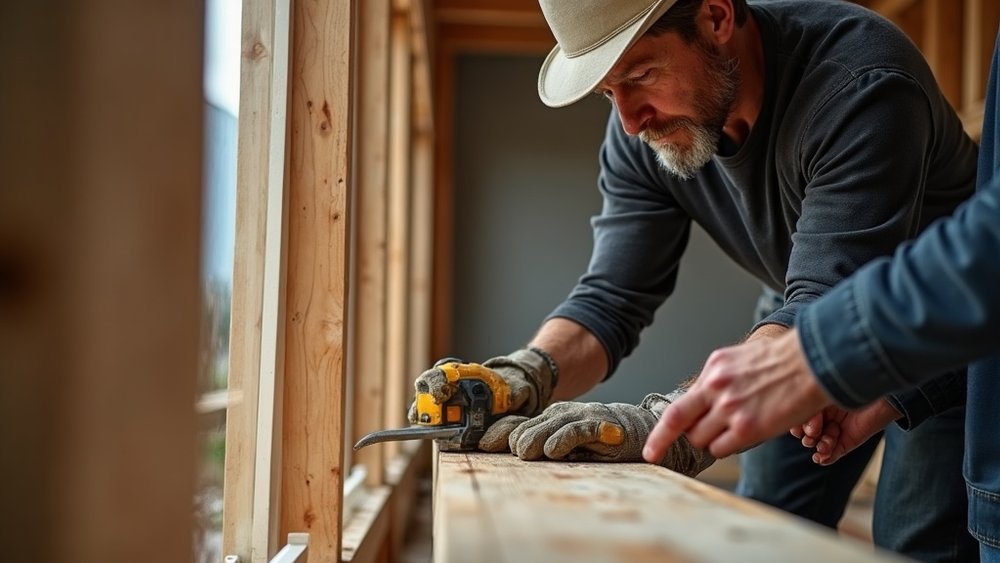
The most effective thing we found was intentional pairing. Not throwing people together and hoping for the best. That's how you get the scenario I described in the opening, where two capable people stop talking to each other after a week. Deliberately matching an experienced tradesperson with a newer hire on a project where both have something concrete and genuine to contribute, and where the framing makes it clear that the transfer of knowledge is expected to go both directions.
That last piece is important. If the pairing is framed as "veteran shows the apprentice how it's done," you reinforce the dynamic that already exists and the resistance that often comes with it. If it's framed as "both of you have something to contribute to this project, and your job is to make the exchange happen," you create a different dynamic, one where the apprentice's contributions are legitimate rather than provisional. Who you pair a new person with matters as much as how you frame it, which is why deliberate pairing with one of your best people is part of how I train new hires.
Delegation without losing the standard requires being explicit about what the standard actually is, and that explicitness is exactly what generational knowledge transfer requires. When the veteran has to articulate what they're doing and why, rather than just demonstrating it, something useful happens for both people. The apprentice gets the reasoning, not just the technique. And the veteran often discovers, in the process of explaining, that some of what they do has good reasons behind it and some of it is habit that can stand to be examined.
Direct feedback to both parties about how to communicate across the style gap has to happen explicitly rather than being left to chance. It's the same lesson I took from the complaint that became a five-year client: friction handled head-on, instead of ignored, is usually where the value is. When the journeyman on that framing project asked me why the apprentice seemed to always push back on his direction, I asked him how he was giving it. The answer was: "I just tell him what to do, that's how I learned." That was the whole story. That method worked in the environment he came up in, where the expectation was that you absorbed by watching and deferred to authority as a default. It doesn't work with someone who learned in a context where explanation and dialogue were part of how knowledge was transferred. Neither approach is wrong. They just need a translation layer.
Building That Layer Into Your Culture
The translation layer isn't complicated to build, but it does have to be intentional. It starts with naming the gap directly: telling both parties that different generations communicate differently, that neither style is a character flaw, and that your expectation is that people on this crew figure out how to work together effectively regardless of where they started.
From there, a few specific things help. Regular brief debriefs at the end of multi-generational pairing projects: what worked, what was frustrating, what would you do differently. Making it explicit that experience earns respect through demonstrated competence and patient teaching, not through seniority alone, and holding the veteran population to that standard. Creating some legitimate domain where younger workers have authority, whether it's on a documentation system or a scheduling tool, so that the exchange of knowledge isn't always one-directional.
None of this requires a training program or a consultant. It requires a leader who sees the communication gap clearly, names it honestly, and builds the expectation that bridging it is everyone's job. Not just the apprentice's job to accommodate the journeyman, and not just the journeyman's job to adapt to the apprentice's expectations.
The Bottom Line
Generational friction on a job site is mostly a communication problem wearing a values problem's clothes. The younger worker and the veteran almost always want the same things from the job — good work, basic respect, a sense that what they're doing matters. What they don't share is a common language for how all of that gets expressed. That gap is real, but it's learnable and bridgeable if you treat it as a leadership problem rather than a generational inevitability.
The crews that figure it out end up with something genuinely valuable: the craft knowledge of experienced tradespeople combined with the skills and adaptability of people who came up in a different world. That combination is an actual competitive advantage. If you're dealing with persistent friction between experience levels on your crew and you're not sure how to address it, my construction business coaching works with construction and trades owners on the people and culture challenges that don't come with easy answers, including this one.
Quick answers
How do you manage generational differences on a construction crew?
Treat it as a communication style problem rather than a values problem. The fundamental motivations — doing good work, being treated with respect, feeling like what they do matters — are consistent across generations. Pair people intentionally, create explicit space for knowledge to travel in both directions, and address communication friction directly rather than assuming it's inevitable.
Why do young apprentices and veteran tradespeople clash on job sites?
Most of the friction comes from different expectations about how feedback should be given, how hierarchy works, and what respect looks and sounds like in practice. Experienced trades people can read younger workers as disinterested; younger workers can read veterans as dismissive. Both readings are partly true and mostly wrong — the actual gap is in communication style, not values.
How do you get older tradespeople to mentor younger ones on a job site?
Don't frame it as mentorship — frame it as pairing people with specific strengths in a way that benefits the project. Give the veteran responsibility for the standard and give the apprentice an area where their skills genuinely contribute, whether that's documentation, scheduling tools, or fresh eyes on a process. When the exchange benefits both people, it tends to happen without being forced.
Get The Builder's Playbook in your inbox
A short note from Eddy with a link to the week's post — one email a week, every Thursday, nothing else.
No spam. Unsubscribe with one click any time. Privacy policy.
This site is protected by reCAPTCHA and the Google Privacy Policy and Terms of Service apply.